
Call Security!
Skateboarders versus the "Smart City"

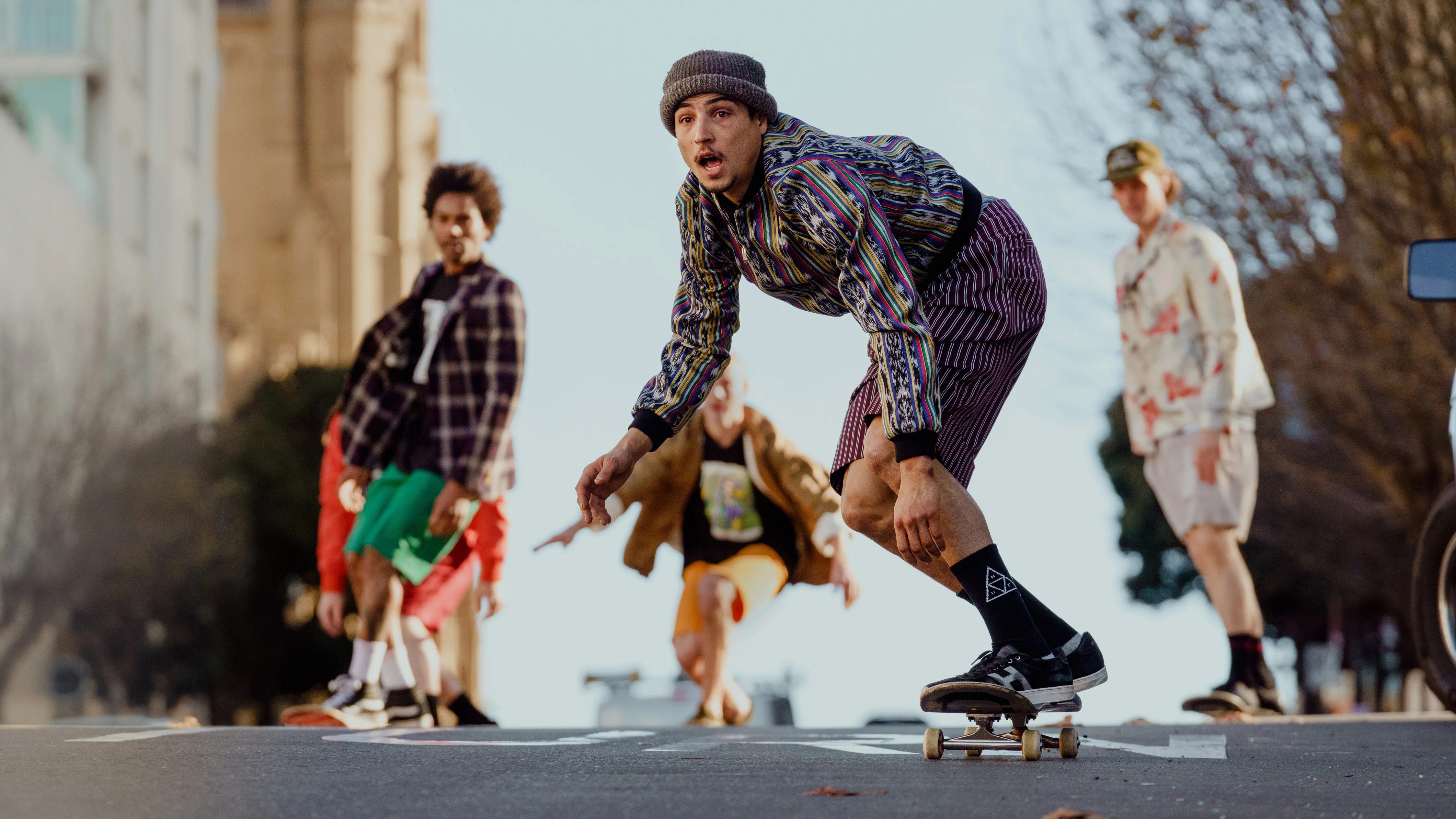
One of my favorite YouTube videos features a guy who is clearly a skilled stunt motorcycle rider practicing controlled, nearly walking-speed wheelies in the empty parking lot of a shopping mall. He has a video camera attached to his helmet. He is approached by a man with a clipboard, that universal talisman of functionaries who take themselves to be deputized on behalf of order. What the functionary says is hard to make out in the recording (probably something about safety). But then it hardly matters, does it? It is really the clipboard that conveys the message, a mute form of authority that often has no real argument to give, and can be effective only if everyone automatically defers to it.
But our stunt rider doesn’t do this. From his helmet cam, we see him riding in a slow circle around Clipboard Man on one wheel, and you can sense that he is at ease. “Does this look dangerous?” he asks, a bit incredulously.
He has a point, which is easy to grasp if you have ever been nearly killed in a parking lot by some upstanding member of the PTA backing out in her Suburban.
But then wheelie guy takes it to the next level. He says to Clipboard Man, “You’re just confused, and it makes you feel things.” The functionary really does seem to be stumped by this interaction.
Wheelie guy rides off. He clearly won the battle, in some important sense, but isn’t fool enough to think the police will be hip to his higher logic.
According to that logic, it is not just that Clipboard Man’s mission is gratuitous, objectively speaking (the parking lot is empty). He is “confused” and it makes him “feel things.” The fetish of rule-following becomes its own justification, and it fills him with a lust for enforcement even when there probably isn’t, in fact, any rule to cover parking lot wheelies. At the risk of seeming unpatriotic, I have the sad duty of pointing out that this seems to be a distinctly American phenomenon. As my French friend Jean-Pierre Dupuy said to me, “You are rule worshippers,” to the point we will make up rules on the fly to cover unanticipated eruptions of the human spirit. To compensate, we keep singing a song to ourselves about being “the land of the free and the home of the brave.”
Parking lot wheelies do not compute
The idea of the “smart city” is that the logic of interconnected electronic devices can be applied to the human landscape. Everything that takes place in the smart city will be optimized and orchestrated by an “urban operating system.” The energy and sewage infrastructure, police protections, trash collection, the allocation of parking and street capacity, the orchestration of traffic lights, the timing of deliveries and all the other services that make a city work will be massaged by data science and achieve a kind of frictionlessness.
Of course, human beings tend to do things that are unpredictable, making them the bug in the system. But if people can be coaxed into driverless cars, it may become possible that our movements through the city can be monitored and coordinated from afar, bringing us closer to what the English philosopher Michael Oakeshott called “a glorious, collisionless manner of living.” He was naming the ambition of a certain modern character-type, whom he called “the rationalist.”
Transformative urban planning has long been an ambition of the high-modernist mindset. The goals of such planning are usually public health, efficiency, beauty and something more elusive, order. Some cities that have gotten the full treatment over the last two centuries are wonderful places to visit despite their controversial remakings; see Paris (much of it demolished and rebuilt by Baron Haussmann under Louis Napoleon in the 19th century). Others, like Brasilia and Chandigarh (both designed from the ground up by Le Corbusier), quickly became ghost towns, full of high-modernist buildings and plazas of impressive conceptual ambition through which the wind whistled forlornly, eventually to be repurposed by squatters or stripped of building materials for use in the surrounding shanty towns where urban life carries on in defiance of the master plan. Such projects are sometimes sited in countries in the developing world that are attractive to Western visionaries precisely because they have no robust tradition of self-rule, and therefore offer no organized resistance to the plan. Le Corbusier offered his services as a planner to Western authoritarians—both the Vichy regime and Stalin’s USSR—before hitting upon this strategy of siting his projects in the developing world.
The history of trying to render the city as an object of rational planning is a checkered one, with successes and failures both. The longing for order that underlies it is sometimes impervious to chastisement by the stubborn realities of human behavior. Something in the technocratic personality is easily tempted into a moral-intellectual space that floats free of the empirical, and has more in common with the non-falsifiable commitments of a cult.
Grand visions are easy to criticize on these grounds, and I will mount such a criticism of the smart city shortly. But let’s begin by noting that usually it is more small-bore, uncoordinated attempts to assert control by that, cumulatively, can lead to a clampdown on the human spirit in urban spaces. Yet, precisely because of the petty-tyrant character of such clampdowns—the obvious fact that they are clampdowns—they may summon a response in certain bold souls that is beautiful to behold. Like Wheelie Guy.
The rapper Lupe Fiasco has a beautiful track titled “Kick, Push” that tells the story of an urban kid who comes to maturity through skateboarding, and in doing so comes up against clipboard authority.
Since the first kick flip he landed
Labeled a misfit a bandit
His neighbors couldn’t stand it
So he was banished to the park
Started in the morning
Wouldn’t stop till after dark
Yea when they said its getting late in here
So I’m sorry young man there’s no skating here
He goes on to meet a girl skater; she takes him to spot in a parking lot he didn’t know about, with an odd feature to it, and they grind it until “security came and said there’s no skating here.” They become part of a crew. They get chased out of office building plazas. “Just the freedom was better than breathing.”
Coming of age, fugitive love, solidarity: getting chased off by “security” plays a role in creating the dissident bond. What a shame it would be if there were no Clipboard Men to heighten the experience of freedom! Like Wheelie Guy, the protagonists of “Kick, Push” confront the forces of order personified: functionaries who are nonetheless flesh and blood, giving chase to kids on skateboards and probably relishing the chase for human reasons of their own. What becomes of this human drama—the drama of freedom—when order is rendered algorithmically? Where is the fight? It is submerged and illegible. It already happened, somewhere else, and the skaters were not party to it.
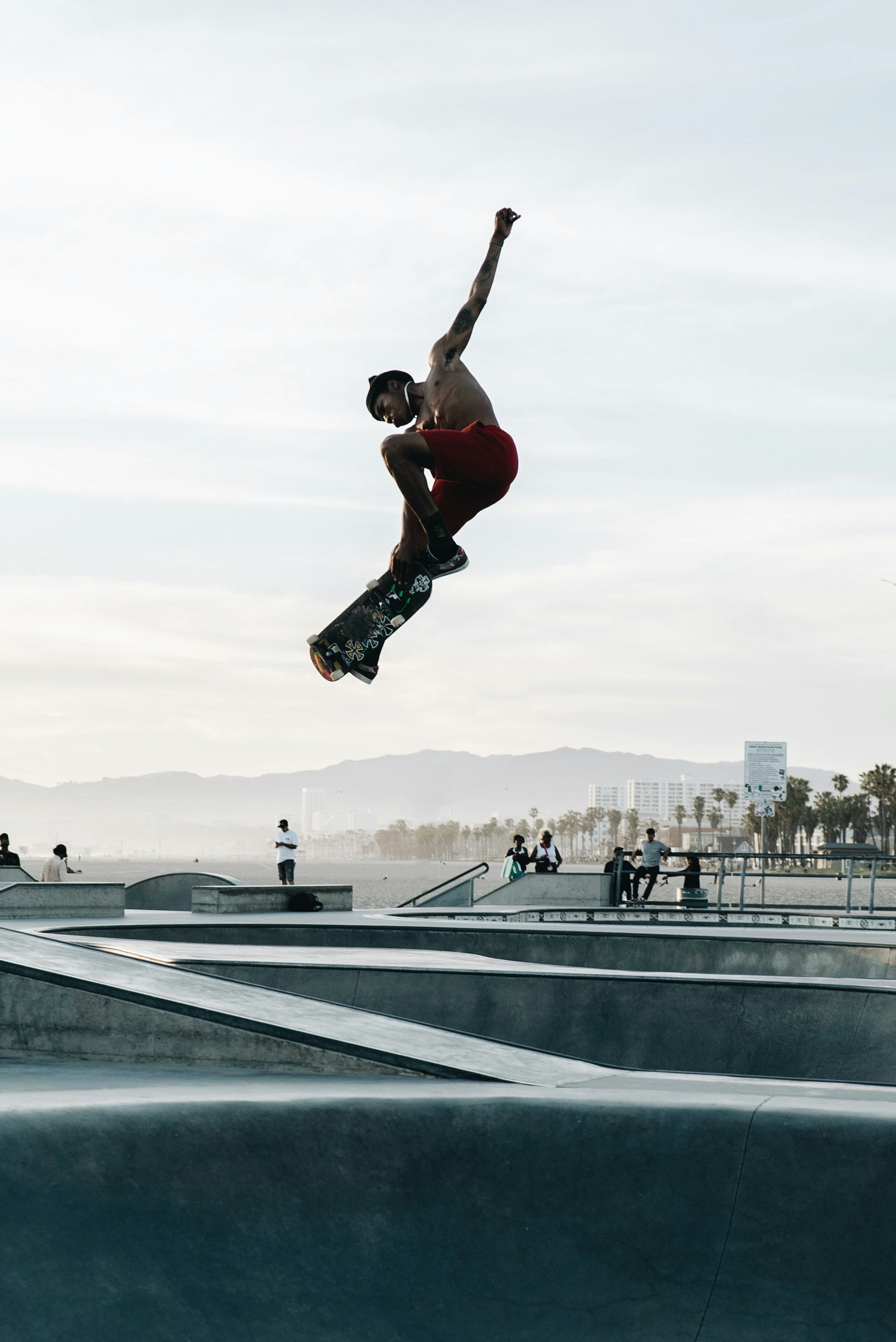
Sometimes urban spaces are designed to forestall moments like those depicted by Lupe Fiasco, making the explicit intervention of “security” unnecessary because the possibilities of use have been more rigorously constrained by the design itself.
